
Places with a past. A 14-minute read, best with a malty Assam.
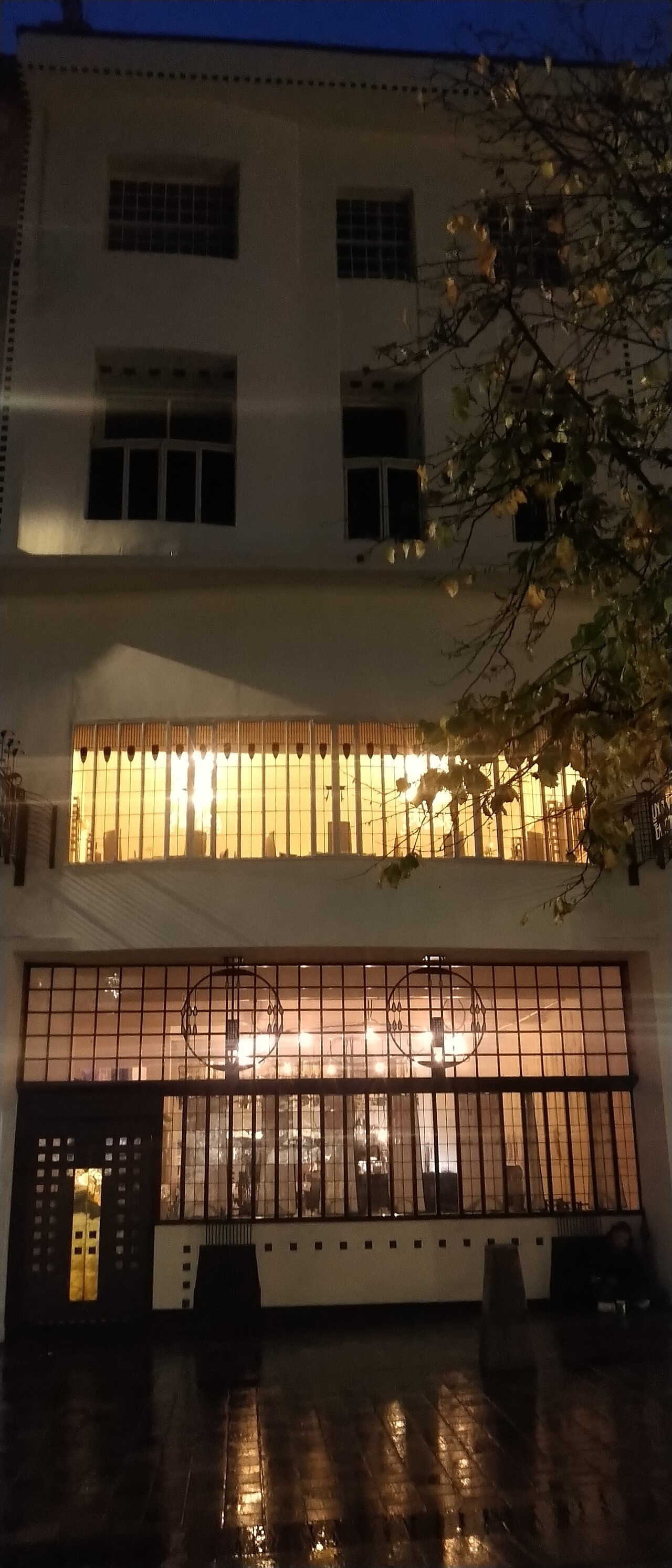
In the late 1800s, Glasgow was the busy second city of the British Empire, a place of shipyards, warehouses and long working days. When those days ended, most of the city’s gathering places served one thing: alcohol. A growing temperance movement wanted to change that, and one small, determined woman turned the idea into the most fashionable rooms in town.
A family in the tea business
Catherine Cranston, known to everyone as Kate or simply Miss Cranston, was born in Glasgow on 27 May 1849, in the hotel her father ran. Her older brother Stuart became a tea dealer at a time when tea, once a luxury, was increasingly seen as a respectable alternative to drink for working people. Stuart is generally credited with the idea of a tea room where customers could sit and enjoy his tea, and the idea spread quickly across the city.
Kate took that idea and made it into something altogether grander. She was a committed supporter of temperance, and she understood something many of her rivals did not: if you want people to choose tea over the pub, the tea room has to be the more delightful place to be.
Art you could sit in
Miss Cranston believed good design was central to her business. Rather than hire established decorators, she gave commissions to young designers whose work was still new and daring, among them George Walton and a young Glasgow architect named Charles Rennie Mackintosh. She met Mackintosh in 1896, and over the next two decades he designed and restyled interiors in all four of her Glasgow tea rooms, often working alongside his wife, the artist Margaret Macdonald.
Her concept was the “art tearoom”: a building of several different rooms, each with its own character, where people could meet, relax and enjoy refreshments without a drop of alcohol. There were rooms for ladies, rooms for gentlemen, places to read and places to talk. For women in particular, a respectable tea room offered something precious in Edwardian Glasgow: somewhere to meet friends and dine without a chaperone.
The Willow
Her crowning achievement opened on Sauchiehall Street in October 1903. For the Willow Tea Rooms, Miss Cranston trusted Mackintosh and Macdonald with everything, inside and out: the façade, the furniture, the light fittings, even the cutlery. The name was a play on the street’s Gaelic roots, and willow motifs run throughout the building.
The jewel was the Room de Luxe, the most extravagant of all the rooms, with a curved bay window running the full width of the façade. It became the tea rooms’ greatest attraction, and the city loved it. Miss Cranston’s tea rooms became thriving centres of Glasgow society, and visitors joked that Glasgow had become a city of tea rooms.
Her quiet genius was to make the alcohol-free evening feel like the most stylish choice in the room.
Still pouring
Kate Cranston died in 1934, and in the decades that followed the Willow passed through many hands and many changes. After a long restoration, the original building reopened as working tea rooms in July 2018. It joined the National Trust for Scotland in 2024, and in February 2026 it took a new name: The Mackintosh Tearooms. It remains the only surviving tea room in the world founded by Miss Cranston and designed by Mackintosh.
You can still take tea in the Room de Luxe today, more than 120 years after Glasgow first fell for it. Which, when you think about it, is a rather lovely thing to toast with a cup.
If you go
- The Mackintosh Tearooms are at 217 Sauchiehall Street, Glasgow.
- Book ahead for the Room de Luxe, the most sought-after seats in the house.
- Pour a malty Assam at home first. It’s the kind of brisk, warming cup Glasgow’s tea rooms were built on.
Photo: Stinglehammer via Wikimedia Commons, CC BY-SA 4.0. Sources include the National Trust for Scotland, the University of Glasgow and Undiscovered Scotland.